
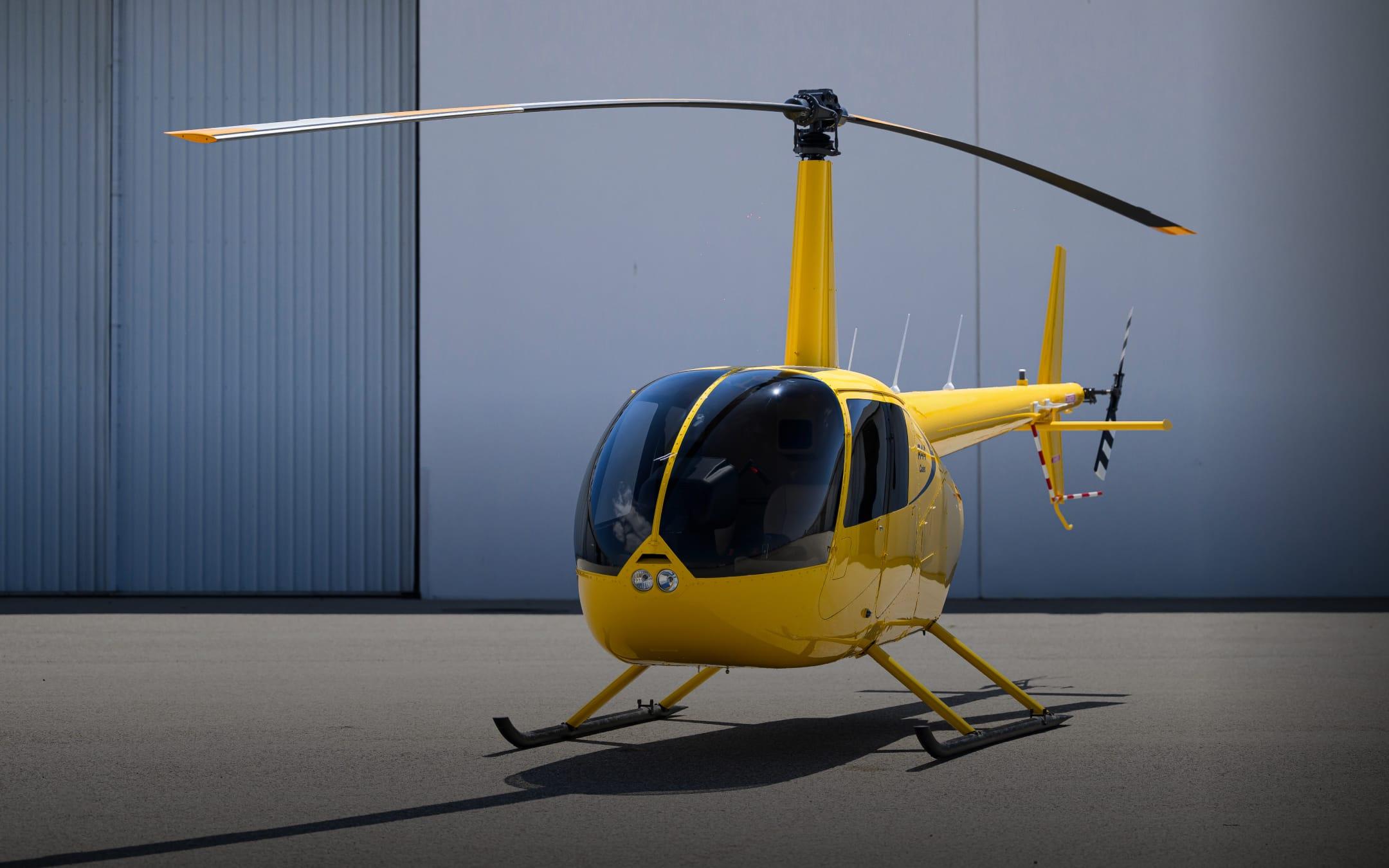
Choosing your first helicopter is a decision that shapes your entire path as a pilot. The market offers many options, but for beginners the key factors are not power or advanced technology — they are simplicity, predictability, and the ability to build real flying skills without unnecessary complexity.
At the early stage, a pilot needs to understand the aircraft, learn how to maintain altitude and heading, and develop coordination. That is why most training programs rely on light helicopters. They are easier to control, more forgiving, and significantly cheaper to operate, which allows students to gain more flight hours.
Among all available options, helicopters from Robinson Helicopter Company are used more often than others. This is not a coincidence but a result of long-term practice in flight schools around the world. These helicopters have become a standard for initial training because they combine simplicity with reliability.
One of the main advantages is straightforward control. The aircraft is not overloaded with complex systems, so beginners can focus on mastering the fundamentals instead of managing advanced avionics. This makes the learning process faster and more intuitive.
Another important factor is predictability. The helicopter responds consistently in different flight conditions, which is crucial when a student is still developing basic skills. Confidence in how the aircraft behaves reduces stress and improves learning efficiency.
Cost also plays a significant role. Flight hours on Robinson helicopters are generally more affordable compared to heavier and more complex aircraft. This means students can train more within the same budget, and in aviation, practice is everything.
In terms of models, beginners usually start with a two-seat helicopter and later move to a four-seat version as their skills improve. The transition between these models is smooth, without a steep increase in complexity.
There is a common belief that such helicopters are only suitable for training. In reality, many pilots continue to fly them even after obtaining their license, especially for private use. While commercial aviation may require more advanced aircraft, the skills learned on Robinson helicopters transfer easily to other types.
Of course, there are alternatives on the market. Some offer more comfort or advanced technology. However, for a beginner, these factors are secondary. What really matters is how quickly and effectively a helicopter allows you to build a solid foundation.
Choosing your first helicopter is not about prestige or specifications. It is about learning efficiently, gaining confidence, and building experience. That is why Robinson remains one of the most practical and reliable choices for beginners.

