
The question of how long training takes is one of the first that future pilots ask. And this is completely understandable: training requires a serious investment of time and resources. At the same time, it is important to understand that there is no strictly fixed timeline. Pilot training is a process that depends on the format of the program, the frequency of flights, and the individual progress of the student.
If we rely on the training programs offered by Aerofix, we can identify several key stages and approximate time intervals.
Training begins with theory. Students study the basics of aerodynamics, meteorology, navigation, helicopter systems, and aviation law.
On average, this stage takes from several weeks to several months. Everything depends on the format of the program: intensive courses allow students to complete theory faster, while a more flexible schedule can extend the timeline.
It is important to understand that theoretical knowledge forms the foundation for all further practice, so rushing through this stage at the expense of understanding is not recommended.
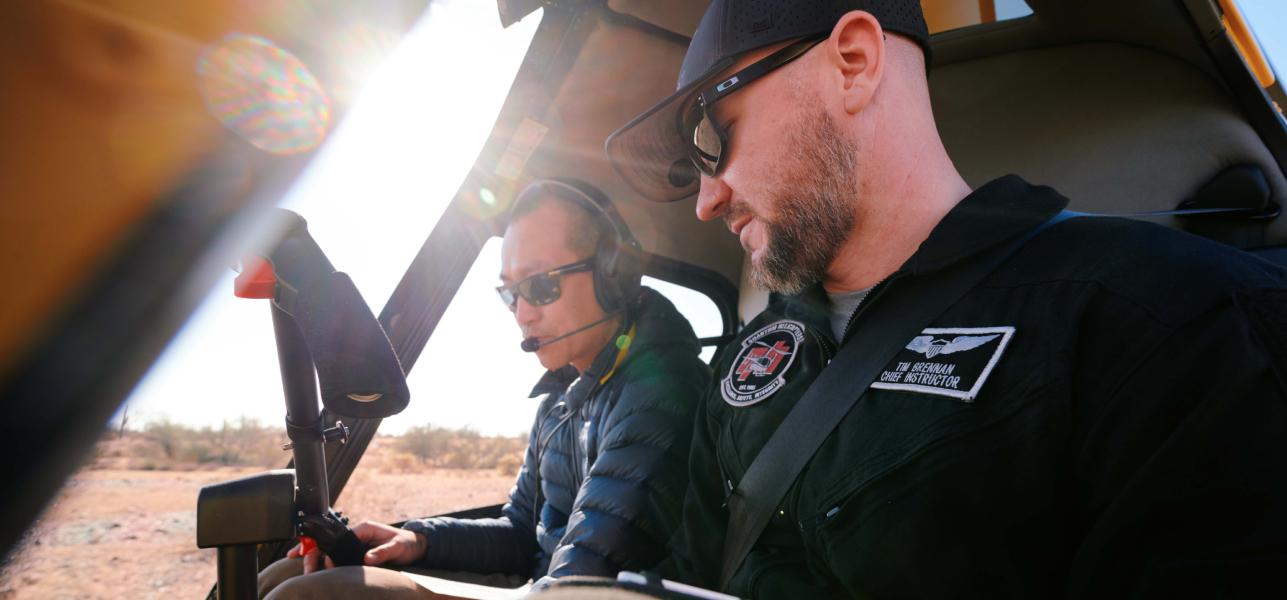
After completing the theory, students move on to the practical part — getting familiar with helicopter controls. At this stage, training flights are conducted with an instructor, where students learn to maintain altitude, heading, and perform basic maneuvers.
This stage usually takes from one to several months, depending on flight frequency and weather conditions.
This is where the fundamental feel of the aircraft is developed.
The next important step is transitioning to solo flights. By this point, the student is already capable of safely operating the helicopter without constant instructor input.
Reaching this level typically takes several additional weeks to months, depending on the pilot’s confidence and consistency of practice.
After the first solo flights, students focus on building flight hours and preparing for final exams.
This stage can take from several months to a longer period, especially if the training is not conducted in an intensive format.
Regularity plays a key role here: the more often a student flies, the faster they reach the required level.
What Affects the Total Training Time
Even within the same program, timelines can vary significantly. The main factors include:
training intensity
frequency of flights
weather conditions
flight school workload
student discipline
For example, with an intensive schedule, training can progress without long breaks, while infrequent sessions can noticeably extend the process.
You can get more detailed information by submitting a request on the website.

