
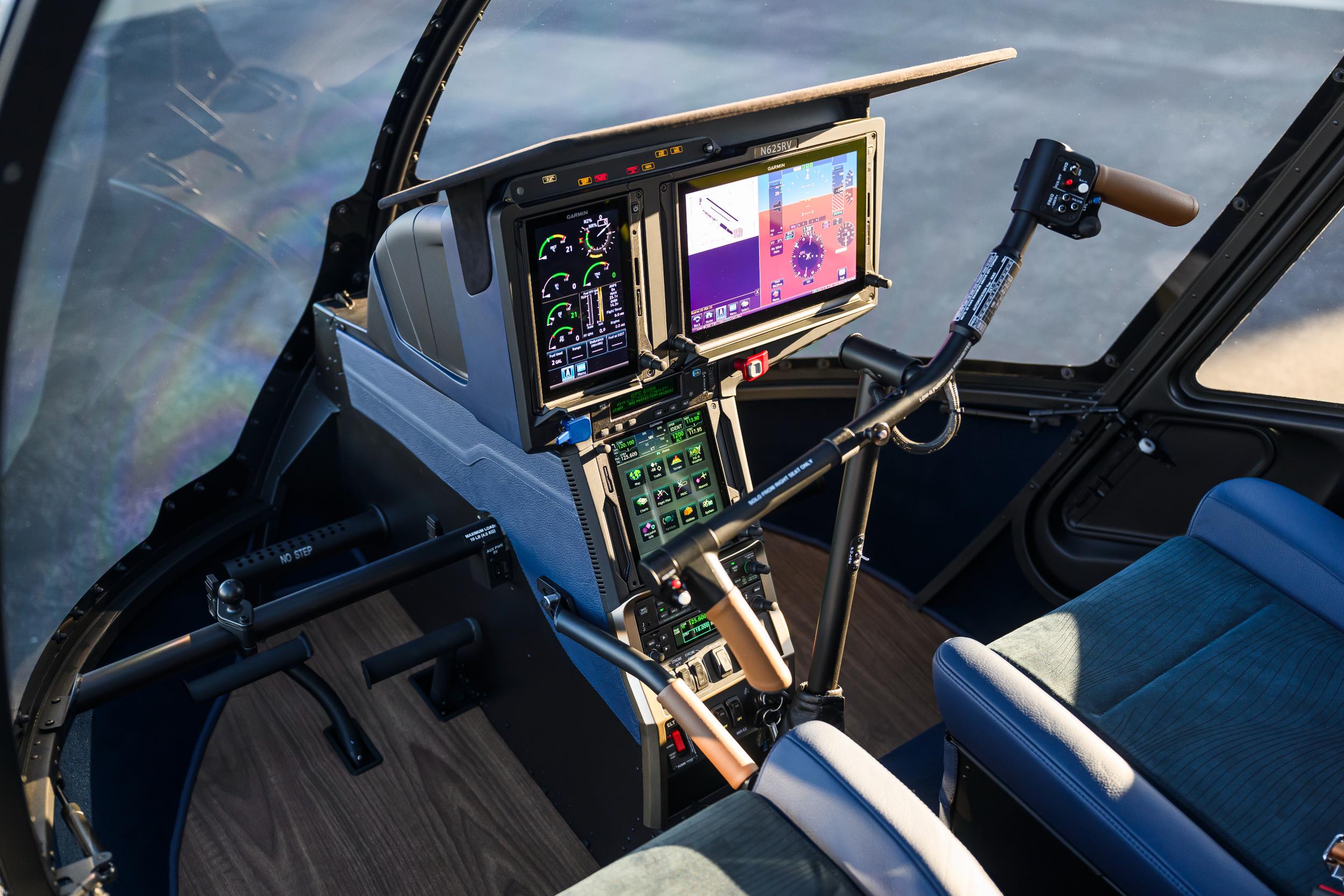
When choosing a new helicopter, it is important to consider not only its flight performance but also the equipment installed in the cockpit. Modern avionics help pilots navigate routes, monitor key flight parameters, and access essential information in a clear and convenient format.
Robinson helicopters combine compact design, functionality, and a thoughtfully arranged cockpit. Depending on the model and configuration, buyers can select equipment suited to their needs, from private flights and business travel to commercial operations.
Avionics include navigation equipment, communication systems, flight instruments, and other electronic systems. Their purpose is to make the pilot’s work more convenient and provide a clear presentation of flight information.
Depending on the model and configuration, Robinson helicopters may feature digital displays, satellite navigation, modern radios, and additional pilot-assistance systems. The exact equipment package varies according to the helicopter model and selected configuration.
For owners, this means being able to choose a helicopter based on their typical routes, operating conditions, and personal preferences. When selecting equipment, it is also important to consider aviation authority requirements and the conditions in which the helicopter will be operated.
The Robinson range includes helicopters designed for different purposes. When choosing a model, it is therefore important to consider not only the aircraft’s basic specifications but also the available equipment options.
Several aspects are worth considering when selecting a configuration:
• Navigation. The equipment should suit the planned routes and operating conditions.
• Communication. Radio communication requirements and the intended use of the helicopter should be taken into account.
• Flight information displays. Digital displays can make flight data clearer and easier to interpret.
• Additional systems. Depending on the model, various systems may be available to assist with specific piloting tasks.
Not every owner needs the most extensively equipped cockpit. The priority is to identify the functions that are genuinely useful and select a configuration without unnecessary costs.
Purchasing a new helicopter is an ideal opportunity to define equipment requirements in advance. This helps ensure that the configuration matches the intended operating conditions and reduces the likelihood of discovering the need for additional modifications after delivery.
However, not every system is available for every model. Installing additional equipment may require approvals, certified solutions, and compliance with specific procedures. For this reason, available configuration options should be confirmed before placing an order.
Whether the helicopter is intended for business travel, private flights, or commercial operations, equipment should be evaluated in the context of actual operating needs rather than simply by the number of installed systems.
The selection process begins with defining the helicopter’s primary purpose. For some buyers, private travel and ease of operation are the main priorities; others may focus on business trips or specialised applications.
When comparing options, consider the helicopter’s intended use, model specifications, cockpit equipment, expected operating costs, and access to technical support. This approach helps you assess not just individual features, but how well the aircraft meets your requirements.

