
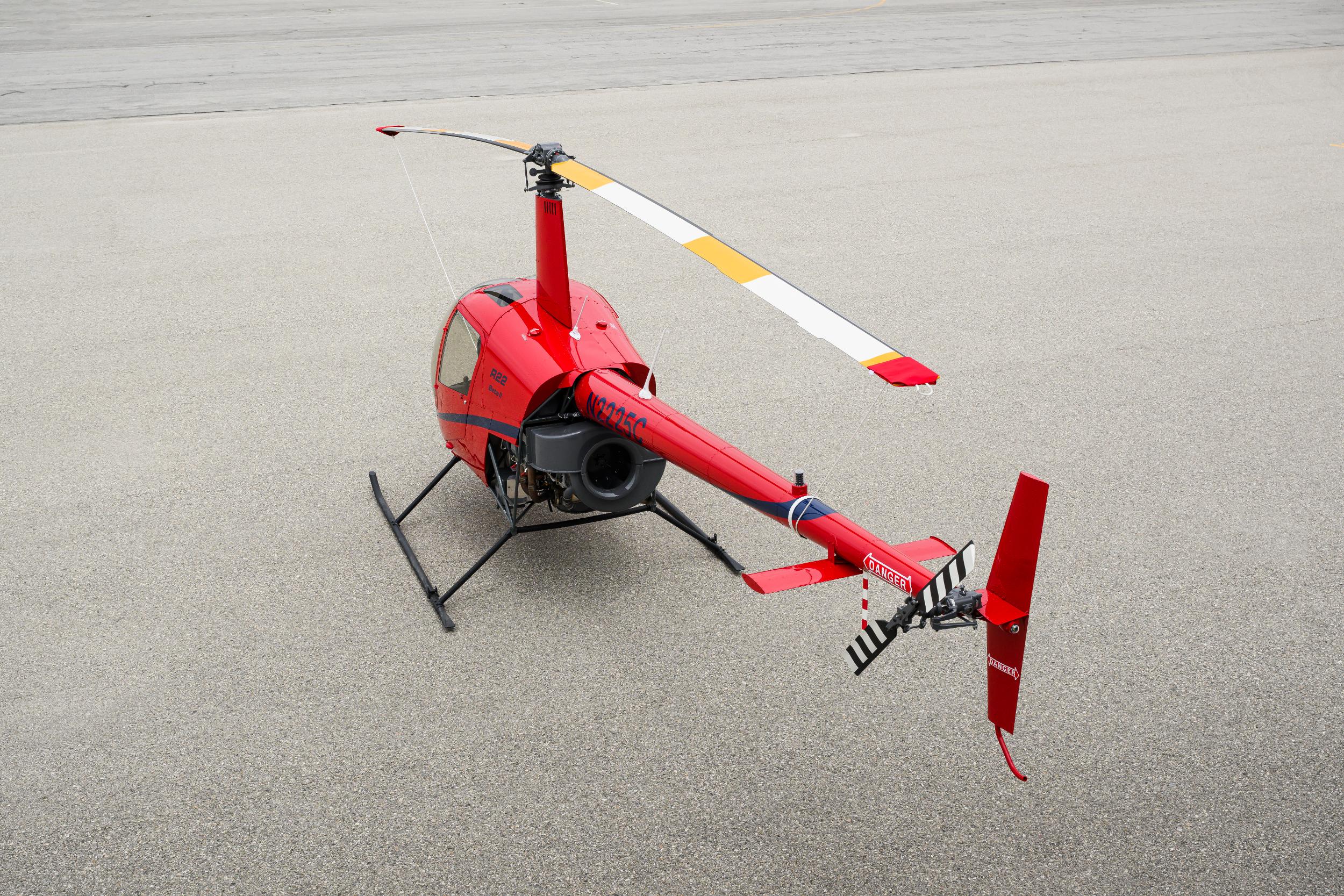
When buying a personal helicopter, a future owner usually thinks first about flying: which model to choose, how many passengers it can carry, which routes will be flown most often, and what equipment will be required. However, there is another factor worth considering from the very beginning — how easy the helicopter will be to sell in the future.
Robinson holds a prominent position in the private aviation market. The R22, R44, and R66 are operated in many countries and are used by private pilots, flight schools, and commercial operators. As a result, there is also an active secondary market for Robinson helicopters.
One of the most sought-after models is the Robinson R44. Its four-seat cabin and versatility allow it to be used for personal flights, training, and various commercial purposes. Its wide range of applications means that potential buyers may include private owners, companies, and flight schools.
The Robinson R66 occupies a different segment. Its turbine engine, five-seat capacity, and higher performance make it attractive to owners who need a helicopter for regular and longer flights. As a result, well-maintained R66 helicopters also have their own audience on the secondary market.
However, the liquidity of a particular Robinson depends on more than just the model. Its operating history is also important. A buyer needs to understand how the helicopter has been used, where it has been serviced, and whether all required maintenance has been performed on schedule.
This is why documentation becomes an important factor when the helicopter is eventually offered for sale. A transparent and well-documented maintenance history gives a potential buyer a clearer understanding of the aircraft’s condition. The fewer questions there are about a particular helicopter’s past, the easier it is to evaluate before purchase.
Flight hours also matter, but they should not be considered separately from other characteristics. Two helicopters with similar flight hours may be in very different technical condition. Operating conditions, maintenance quality, component condition, and compliance with the manufacturer’s requirements all need to be taken into account.
Equipment can also affect the attractiveness of a Robinson on the secondary market. Modern avionics, useful optional equipment, and a practical configuration can make a particular helicopter more appealing to its next owner. At the same time, a highly specialized configuration designed for a narrow type of operation may appeal to a smaller group of buyers.
The external condition of the aircraft should not be separated entirely from its market appeal either. A well-maintained cabin, clean exterior, and overall appearance complement the helicopter’s technical history. For a buyer, this does not replace a professional inspection, but it can influence the initial impression of the aircraft.
Another advantage of Robinson is the recognition of its models. Buyers do not have to familiarize themselves with a rare aircraft represented by only a few examples on the market. The R22, R44, and R66 are well known within the aviation community, while the Robinson brand itself has a broad international presence.
For the owner, this means that a properly operated Robinson can be considered not only in terms of today’s requirements. Needs may change after several years: a larger helicopter may be required, the owner may decide to move from an R44 to an R66, or simply change the way they use private aviation. In such a situation, the ability to sell the existing helicopter becomes an important part of moving on to the next aircraft.
Maintaining future resale potential therefore begins almost immediately after purchase. Timely maintenance, careful record keeping, attention to technical condition, and sensible equipment choices all help preserve the helicopter’s attractiveness on the secondary market.
When choosing a Robinson, it is worth considering not only how well a particular helicopter meets today’s needs. It also makes sense to consider how understandable and desirable that aircraft will remain to its next owner.
It is the combination of the brand’s widespread presence, the recognition of its models, and the broad range of operating scenarios that supports demand for Robinson helicopters on the secondary market. For the owner, this provides an additional reason to consider Robinson when buying a helicopter: the aircraft can be selected for flying today while keeping in mind the possibility of offering it to a new owner in the future.

