
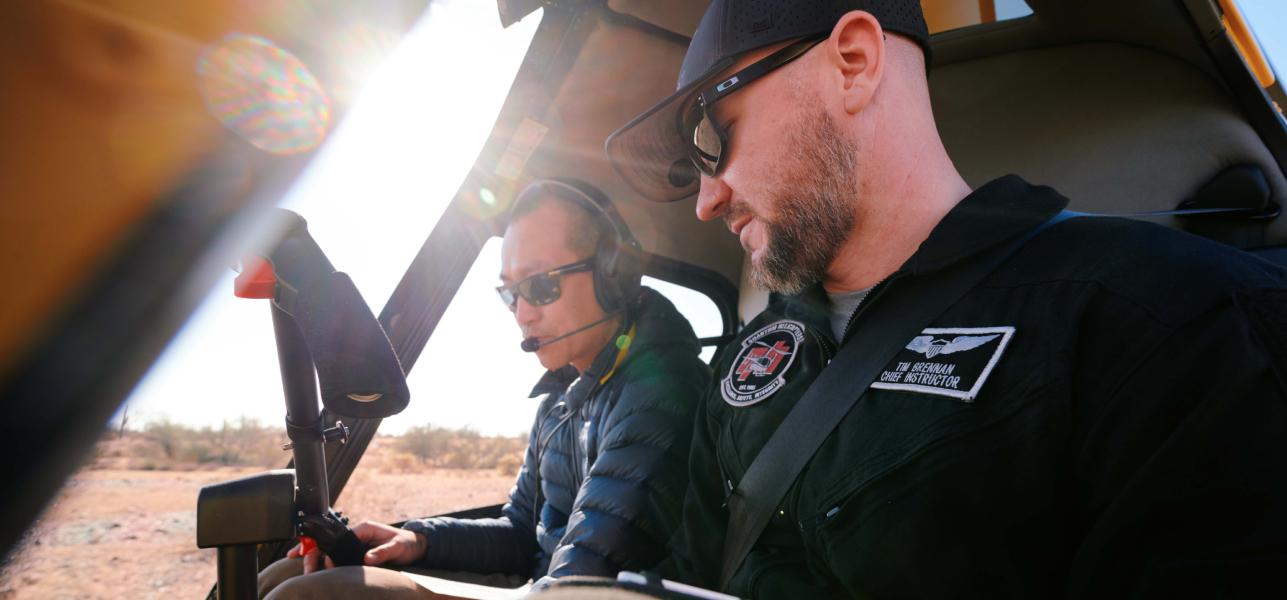
When someone first enters a flight school, they usually think about getting a license, future flights, and the experience of flying a helicopter. But behind all of that, there is another important question — what kind of aircraft will be used for training. In many countries around the world, the answer is often helicopters from Robinson Helicopter Company.
This is not a coincidence or simply a matter of popularity. Robinson became one of the main standards in helicopter training because these aircraft were designed to be practical, understandable, and accessible for pilots.
One of the biggest advantages of Robinson helicopters is their simplicity. For beginners, this is extremely important. The first hours in the air already involve a huge amount of new information: coordination, altitude control, direction management, weather awareness, and spatial orientation. If the aircraft is overloaded with complex systems, learning becomes much more difficult.
Robinson helicopters allow students to focus on the fundamentals of flying. The aircraft provides clear feedback and helps pilots quickly understand the principles of helicopter control. That is why many instructors consider these models ideal for beginners.
Another important factor is how widespread they are. Robinson helicopters are used in flight schools all over the world. For students, this means that the skills they develop during training remain useful long after graduation. After receiving a license, pilots can continue flying familiar aircraft instead of adapting to something completely different.
Predictability is also a major reason why these helicopters are preferred for training. During the learning process, it is essential that the aircraft behaves consistently and logically in different flight conditions. This helps students truly understand how a helicopter works instead of simply memorizing actions.
Availability also plays an important role. Because Robinson helicopters are so common in training programs, schools can often provide more regular flight schedules without long gaps between lessons. In aviation, consistency is one of the key factors behind fast progress.
Another advantage is the smooth transition from training to real-world flying. Many pilots continue flying Robinson helicopters after obtaining their license. This creates a natural continuation of the learning process, where students move directly from training into private or personal flights using familiar aircraft.
Robinson helicopters are not chosen only because they are convenient for students. Instructors also value them for their practical design, understandable flight characteristics, and long operational history. Over time, these helicopters have become a kind of universal training platform in the world of light helicopter aviation.
Of course, there are more advanced and technologically complex helicopters available for pilot training. But at the beginning, most students do not need excessive electronics — they need confidence, stability, and the opportunity to build strong flying fundamentals. Robinson helicopters provide exactly that.
As a result, Robinson has become more than just a popular training helicopter. For thousands of pilots around the world, it has become the true entry point into aviation and the aircraft associated with their very first solo flight.

