
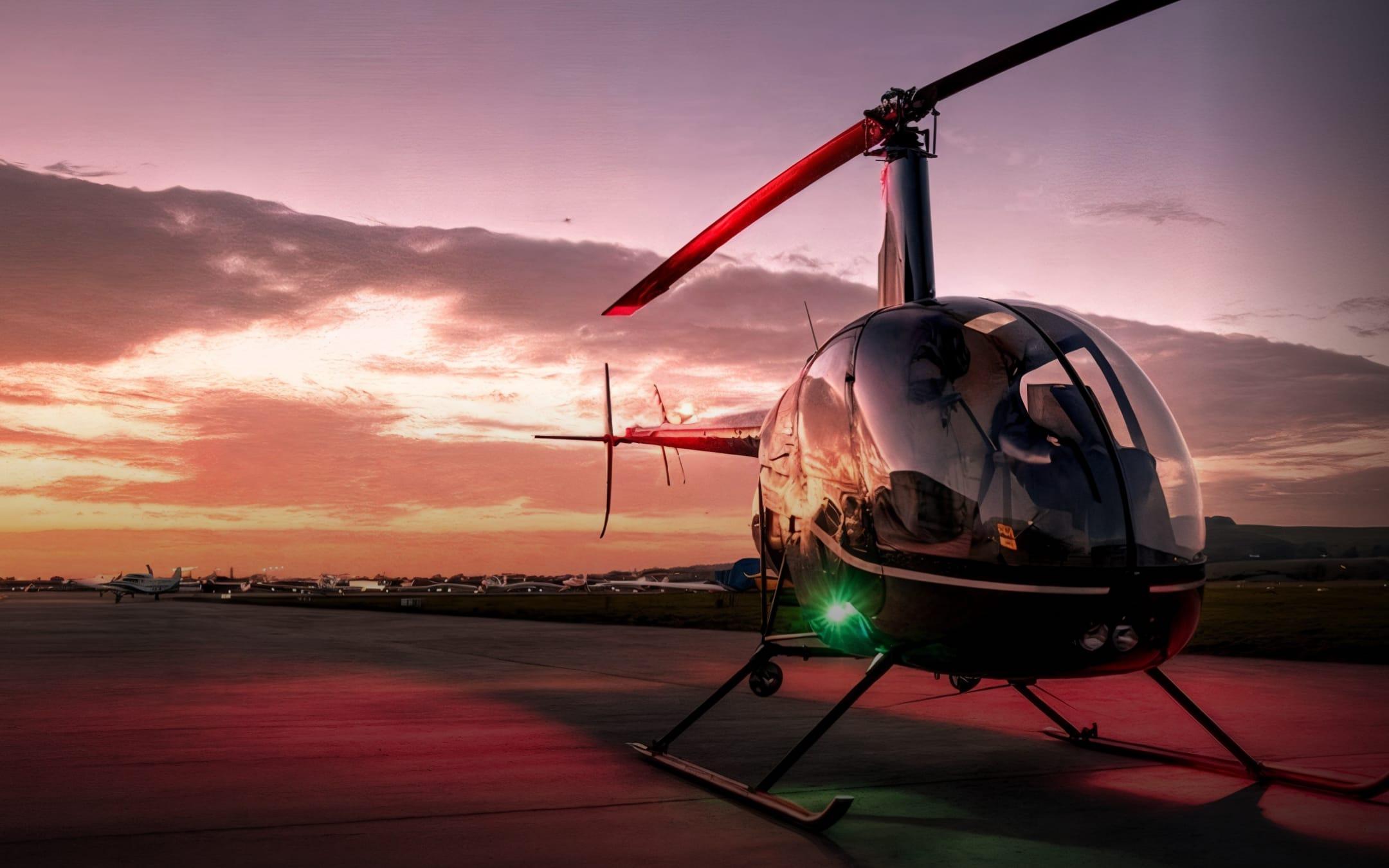
When someone decides to become a helicopter pilot, one of the first questions they ask is: which helicopter is the best for training? Around the world, the answer is most often Robinson. That is why thousands of flight schools use Robinson helicopters to train future pilots, and why the R22 and R44 have become the benchmark for civilian helicopter training.
The main reason for this popularity is that Robinson helicopters were designed not only as reliable aircraft for private owners but also as excellent platforms for flight training. Their design allows students to quickly understand the fundamentals of helicopter control while gradually developing the skills required for safe and confident flying.
During training, future pilots learn takeoffs and landings, hovering, navigation, cross-country flying, and how to respond in different flight situations. Robinson helicopters allow students to focus on developing their flying skills instead of dealing with overly complex onboard systems. This is especially valuable during the early stages of training.
Another important advantage is the helicopter’s predictable flight characteristics. Robinson helicopters respond precisely to pilot inputs, helping students clearly understand the relationship between their actions and the aircraft’s behavior. This approach builds strong flying habits from the very beginning.
The widespread use of Robinson helicopters is another key factor. Flight schools throughout Europe, North America, Asia, Australia, and many other regions use Robinson aircraft for pilot training. Learning on these helicopters gives students experience with aircraft that are recognized and respected across the global aviation community.
For many students, training on a Robinson becomes the first step toward owning a helicopter. After earning their license, pilots are already familiar with these aircraft and feel confident flying them. As a result, the transition from flight school to helicopter ownership becomes much smoother.
Robinson’s popularity is also the result of decades of continuous development while maintaining a consistent flying philosophy. A pilot who begins training on the Robinson R22 can transition to the Robinson R44 or Robinson R66 with relative ease. The core flying principles remain familiar, making adaptation much faster.
Robinson helicopters are also a practical choice for flight schools. They are known for their reliability, are well suited to intensive training operations, and have been used to educate thousands of pilots worldwide. This is why instructors across the globe conduct training flights on Robinson helicopters every day.
Another major advantage is the extensive international Robinson community. Training programs, instructional materials, experienced instructors, and decades of accumulated knowledge help maintain high training standards regardless of where students learn to fly.
However, being the global standard is about more than popularity. It is about the trust the brand has earned through decades of successful operation. By choosing to train on a Robinson, future pilots learn to fly on helicopters that have introduced thousands of people around the world to aviation.
That is why Robinson training is considered the global standard. These helicopters do more than help students earn a pilot license—they provide a strong foundation for a lifetime in aviation. For many pilots, learning to fly on a Robinson is the beginning of a journey that eventually leads to owning a helicopter and enjoying the freedom of private aviation.

